

Meet Amanda!

Amanda Rocheleau has worked with over 750 professional teams and conference groups, supporting those in helping roles through training and speaking focused on burnout, compassion fatigue, and workplace mental health.
Her approach is practical and relatable while using real-life examples, storytelling, and reflection to make complex topics easier to understand and apply.
Amanda brings authenticity, warmth, and a touch of humour to her sessions, creating a space where people feel supported and engaged.
Participants leave with clear, realistic strategies they can apply immediately to support their well-being and strengthen their work within their teams.

LIVE ONLINE TRAINING
IN-PERSON TRAINING
ON DEMAND COURSES
Engaging in-person workshops, keynote speeches and presentations
Engaging online live workshops with interactive components with option to record and stream later
Self-paced online learning experiences that include videos, worksheets and guided reflection
Training Topics & Focus Areas
Each training is customized to fit your organization including session length, group size, and professional context ensuring content is relevant, practical, and immediately applicable.
Topics may include burnout, compassion fatigue, trauma-informed practice, and workplace mental health. Every session is adapted to support your team’s specific needs while maintaining psychological safety.
Click a tab to read more
Burnout
Burnout is a state of physical and emotional exhaustion that develops in response to prolonged, unrelenting stress. It is commonly characterized by exhaustion, depersonalization or emotional distancing, and a reduced sense of efficacy or accomplishment. In these workshops, burnout is explored through an ecological and systems-informed lens, moving beyond individual responsibility to examine how workplace structures, expectations, and cultures contribute to chronic strain. Participants will explore both personal and organizational practices that support sustainability in demanding helping roles.
Possible Learning Objectives
-
Understand burnout as an occupational phenomenon rather than an individual shortcoming
-
Identify the core dimensions of burnout, including exhaustion, depersonalization, and reduced professional efficacy
-
Assess signs of burnout at both individual and collective or team levels
-
Explore the six key workplace factors that contribute to burnout
-
Examine how team culture and organizational practices can either increase or reduce burnout risk
-
Identify protective factors that support sustainability
-
Develop practical, realistic strategies to reduce burnout risk at personal, team, and workplace levels
-
Strengthen shared responsibility for burnout prevention and recovery within organizations
Amanda will work collaboratively with you to design a training that integrates the themes most relevant to your team or responds to a specific workplace challenge. Workshops can be blended and adapted to align with your goals, context, and capacity.
Each training incorporates practical, evidence-informed wellness practices that support and safeguard the psychological well-being of helping professionals. Participants can expect to leave with clear, actionable strategies they can apply immediately to navigate the emotional and relational demands of caring work.
Training,
Customized
for your Organization
Each workshop is tailored to fit your organization, taking into account your preferred session length, group size and professional context ensuring content is relevant, practical and immediately applicable.
Designed to fit your needs
Session Length
Customized to fit your schedule and learning goals
Group Size
Designed for intimate teams or larger groups
Professional Context
Tailored to your organization's field, role and challenges
Signature Topics
Burnout
Evidence informed strategies to prevent burnout and create sustainable ways of working
Compassion Fatigue
Understand the impact of caring work and strengthen resilience without losing compassion
Trauma
Informed Practice
Apply trauma informed principles while reducing the impact of secondary traumatic stress
Workplace
Mental Health
Create psychologically healthier workplaces through practical, evidence informed strategies
Trusted BY


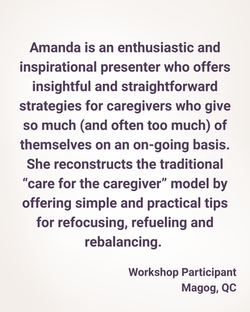
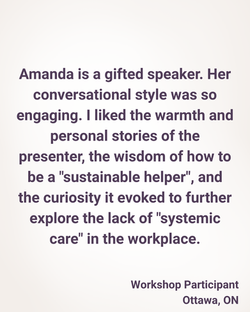
What Participants Say
 |  |  |  |
|---|---|---|---|
 |  |  |  |
 |  |

ON-DEMAND COURSES
On-demand courses are self-paced learning experiences that feature pre-recorded video lessons, worksheets, reflection questions and downloadable resources. Participants will be given access to the online course after purchase where they can work through the material at their own pace. Participants can track their progress and replay lessons any time. Some courses include group discussion boards to make the learning experience even more engaging.
Individuals can enroll to a course anytime and have access to the content for a lifetime.
If you would like to enroll a group of people at once, please contact us to request a group rate.
Frequently Asked Questions
Planning a workshop or training event often comes with questions about format, content, group size, and logistics. Below you'll find answers to some of the most common questions organizations ask when considering a workshop, keynote, webinar, or professional development session.
Frequently Asked Questions
Q: Who are these workshops designed for? Workshops are designed for helping professionals and people in caregiving roles - often referred to as "helpers". Examples of helpers might include frontline workers, healthcare providers, social service professionals, educators, leadership teams, veterinary care workers, union representatives, public service agents, volunteers, first responders, early childhood education workers, etc. Content is accessible and applicable across experience levels.
Q: Can workshops address more than one topic area? Yes. Many trainings integrate multiple themes, such as burnout, compassion fatigue, self-care, or psychological health and safety. Topics can be blended to respond to specific workplace challenges or organizational goals.
Q: Are workshops suitable for large groups or teams? Yes. Workshops can be adapted for small teams, leadership groups, or very large audiences. The format and level of interaction are adjusted to support engagement while maintaining psychological safety.
Q: Are workshops trauma-informed? Yes. All workshops are grounded in trauma-informed, values-based, and anti-oppressive principles. Content is delivered in ways that prioritize consent, choice, and emotional safety, particularly when discussing sensitive or emotionally demanding topics.
Q: Do workshops include practical tools or strategies? Yes. Participants can expect practical, evidence-informed tools they can apply immediately. This may include strategies for nervous system regulation, communication, boundary-setting, peer support, and sustainable caregiving practices.
Q: How long are workshops typically? Workshops range from short sessions (60–90 minutes) to half-day or full-day trainings. Content and pacing are adjusted to match the time available, an organization's budget and learning objectives.
Q: Are workshops available online? Yes. Workshops, keynotes, and training sessions can be delivered in-person, virtually, or in a hybrid format. Content and activities are adapted to suit the learning environment and group size.